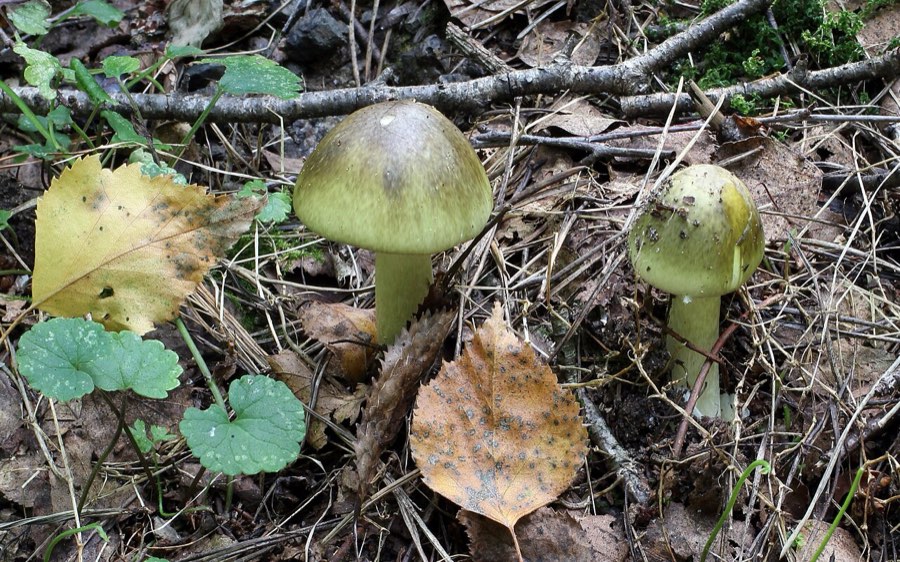
Can be deadly to eat
Never eat a wild plant unless you are 100% certain what it is. Don't touch or eat any plant you don't know, and wash your hands after working in the garden or walking in the woods.
Know the deadly ones
- Death cap. Grows with oaks and other hardwood trees, including in city parks and yards. In California it's most common in the wet months, October to April.
- Destroying angels. All white, with a ring on the stalk and a sack-like cup at the base, sometimes hidden underground. The western destroying angel grows throughout California. In Missouri, destroying angels appear June to November.
- Looks won't tell you. Edible and deadly Amanitas can be hard to tell apart by appearance alone.
Why it's dangerous
- A few bites can destroy the liver. Some survivors need a liver transplant.
- Cooking doesn't help. The poison isn't destroyed by cooking.
- Symptoms are delayed. Vomiting, diarrhea and cramps start 6 to 24 hours later, may seem to get better, then liver failure follows.
- It happened in 2025–26. In Northern California, 39 people were poisoned between November 2025 and March 2026; four died. One was sent home from the ER with a stomach bug diagnosis and died days later.
What to do
- Don't wait for symptoms. If anyone ate a wild mushroom, call Poison Control right away.
- Tell doctors it was a wild mushroom, even if the person seems to get better.
- Get mushrooms from the store. Never eat a wild one unless a mushroom identification expert says it's safe.
POISON CONTROL1-800-222-1222
Free, 24 hours, anywhere in the US. If someone collapses, has a seizure, has trouble breathing or can't be woken up, call 911 now.
SOURCES
CDC MMWR (2026 and 2017 reports on Amanita poisonings); Poison Control (poison.org); Missouri Department of Conservation. Checked Nov 17, 2026.
Doomkit is a reference, not a substitute for emergency services. In an emergency, call 911.